
by Sonia Roman | Nov 12, 2024 | Buyers, Buying Tips
As a veteran or active-duty service member, you may be missing out on one of the most valuable benefits available to you: the VA Loan. This government-backed mortgage offers unique advantages that make homeownership more accessible and affordable for veterans, yet many remain unaware of its full potential.
1. No Down Payment Required
The most significant benefit of a VA Loan is that you don’t need a down payment. While traditional mortgages often require 5% to 20% down, VA loans allow you to finance 100% of the home’s purchase price—making it easier to become a homeowner.
2. No Private Mortgage Insurance (PMI)
Unlike conventional loans, VA Loans don’t require PMI, even with no down payment. This saves you money each month and lowers the overall cost of the loan.
3. Lower Interest Rates
VA loans often come with lower interest rates compared to traditional mortgages, meaning you’ll pay less over the life of your loan.
4. No Prepayment Penalties
You can pay off your VA Loan early without any prepayment penalties—giving you more flexibility and the chance to save on interest.
5. Higher Loan Limits
While there are limits based on the county and home price, the VA doesn’t impose a hard cap on the loan amount. In higher-cost areas, you can often qualify for a larger loan than you might think.
6. Flexible Eligibility Requirements
VA loans are available to veterans, active-duty service members, National Guard members, and qualifying surviving spouses. Eligibility is often more flexible than traditional loans, making it easier for veterans to qualify.
7. Closing Costs Are Limited
The VA limits the amount you can be charged for closing costs, which helps make the homebuying process more affordable.
8. Affordable Funding Fee
While there is a one-time funding fee, it’s typically much lower than private mortgage insurance (PMI), and it can be rolled into the loan.
9. Streamline Refinance Option
If you already have a VA loan, you can take advantage of a Streamline Refinance (IRRRL) to lower your rates with less paperwork and fewer fees.
10. No Minimum Credit Score Requirement
The VA doesn’t set a minimum credit score for eligibility, giving veterans with less-than-perfect credit a better shot at homeownership.
Final Thoughts
The VA Loan is one of the most powerful tools available to veterans, but many don’t fully understand its benefits. If you’re eligible, take advantage of these incredible perks—no down payment, no PMI, lower rates, and more—to make homeownership a reality.
Talk to a VA-approved lender today and start your journey toward owning a home. It’s a benefit you’ve earned, and it’s time to put it to use!

by Sonia Roman | Oct 8, 2024 | Buyers, Foreclosures
If you’re a homeowner, odds are your equity has grown significantly over the last few years. Equity builds over time as home values grow and as you pay down your home loan. And, since home prices skyrocketed during the ‘unicorn’ years, you’ve likely gained more than you think.
According to the latest Equity Insights Report from CoreLogic, the average homeowner has more than $274,000 in equity right now. That much equity can help you achieve certain goals. In a recent article, Bankrate elaborates:
“While the pandemic created serious challenges, the silver lining for anyone who owned a home was the sizable equity gain. Understanding how home equity works, and how to leverage it, is important for any homeowner.”
Here are a few examples of how you can put your home equity to work for you.
1. Buy a Home That Fits Your Needs
If your current space no longer meets your needs, it might be time to think about moving to a bigger home. And if you’ve got too much space, downsizing to a smaller home could be just right. Either way, you can put your equity toward a down payment on a home that fits your changing lifestyle. A real estate agent can help you figure out how much equity you’ve got and how to use it when buying your next home.
2. Reinvest in Your Current Home
Renovations are a great option if you want to change your living space, but you aren’t yet ready to make a move. Home improvement projects give you the freedom to tailor your home to match your needs and personal style. But it’s important to consider the long-term benefits certain upgrades can bring to your home’s value. Lean on a real estate professional for the best advice on which improvement projects to prioritize in order to get the greatest return on your investment when you sell later on.
3. Pursue Personal Ambitions
Home equity can also serve as a catalyst for realizing your life-long dreams. That could mean investing in a new business venture, retirement, or funding an education. While you shouldn’t use your equity for unnecessary spending, using it responsibly for something meaningful and impactful can really make a difference in your life.
4. Understand Your Options to Avoid Foreclosure
Today the number of foreclosure filings remains below the norm, so there’s no need to fear a wave of foreclosed homes flooding the market. But unfortunately, there are still some homeowners who experience the foreclosure process each year. If you’re facing financial difficulties, having a clear understanding of your options and how your equity can help is crucial. Equity can act as a financial cushion that can be used in times of unexpected challenges or unforeseen circumstances that may disrupt your ability to make mortgage payments on time.
In an article, Freddie Mac explains it this way:
“If exiting your home is the best option for you, selling with equity may be a good option. When selling with equity, you are using the proceeds from selling your home at a higher price than the amount you owe on your mortgage to pay off your remaining mortgage debt.”
Bottom Line
Your equity can be a game changer in reinvesting in your needs, pursuing your goals, and even helping you avoid foreclosure during difficult times. If you’re unsure how much equity you have in your home, connect with a local real estate professional so you can start planning your next move.

by Sonia Roman | Oct 8, 2024 | Buyers, Infographic, Rent vs. Buy
Housing pricing and trends can vary greatly depending on location, economic factors, and societal shifts. Here are some overarching trends and considerations:
Supply and Demand Dynamics: One of the primary drivers of housing prices is the balance between supply and demand. In areas where housing supply is limited and demand is high, prices tend to increase. This can be due to factors such as population growth, urbanization, or restrictions on new construction.
Interest Rates: Interest rates play a significant role in housing affordability. Lower interest rates generally encourage more people to buy homes, as mortgages become more affordable. Conversely, higher interest rates can deter potential buyers and slow down the housing market.
Economic Conditions: The overall health of the economy, including factors like employment rates, income levels, and consumer confidence, can impact housing prices. In times of economic growth, people tend to have more purchasing power, which can drive up housing prices. Conversely, economic downturns can lead to decreased demand and lower prices.
Location: Location remains a crucial factor in determining housing prices. Desirable areas with good schools, amenities, and job opportunities typically command higher prices. Urban areas often have higher housing costs due to the convenience and access they offer, while rural areas may have more affordable options.
Demographic Trends: Changing demographics, such as an aging population or an influx of younger buyers, can influence housing trends. For example, millennials entering the housing market in large numbers may drive up demand for starter homes or urban apartments.
Government Policies: Government policies, including zoning regulations, tax incentives, and housing subsidies, can affect housing prices. For instance, policies that promote affordable housing or restrict certain types of development can impact supply and demand dynamics.
Impact of Technology: Technological advancements, such as online real estate platforms and virtual tours, have transformed the way people search for and buy homes. These innovations can streamline the home-buying process and influence pricing dynamics.
Pandemic Effects: The COVID-19 pandemic has had a significant impact on the housing market. While there was initial uncertainty and a slowdown in activity during lockdowns, many markets saw a surge in demand for suburban and rural homes as remote work became more prevalent. This shift in preferences has influenced pricing in different areas.
Environmental Considerations: Increasing awareness of climate change and environmental sustainability is also influencing housing trends. There’s a growing demand for energy-efficient homes, as well as properties in areas less vulnerable to natural disasters.
Overall, housing pricing and trends are complex and multifaceted, shaped by a combination of economic, social, and environmental factors. Keeping an eye on these various factors can provide insights into where the market is headed and how it may impact buyers and sellers.

by Sonia Roman | Oct 8, 2024 | Buyers, Inventory
There’s no denying the last couple of years have been tough for anyone trying to buy a home because there haven’t been enough houses to go around. But things are starting to look up.
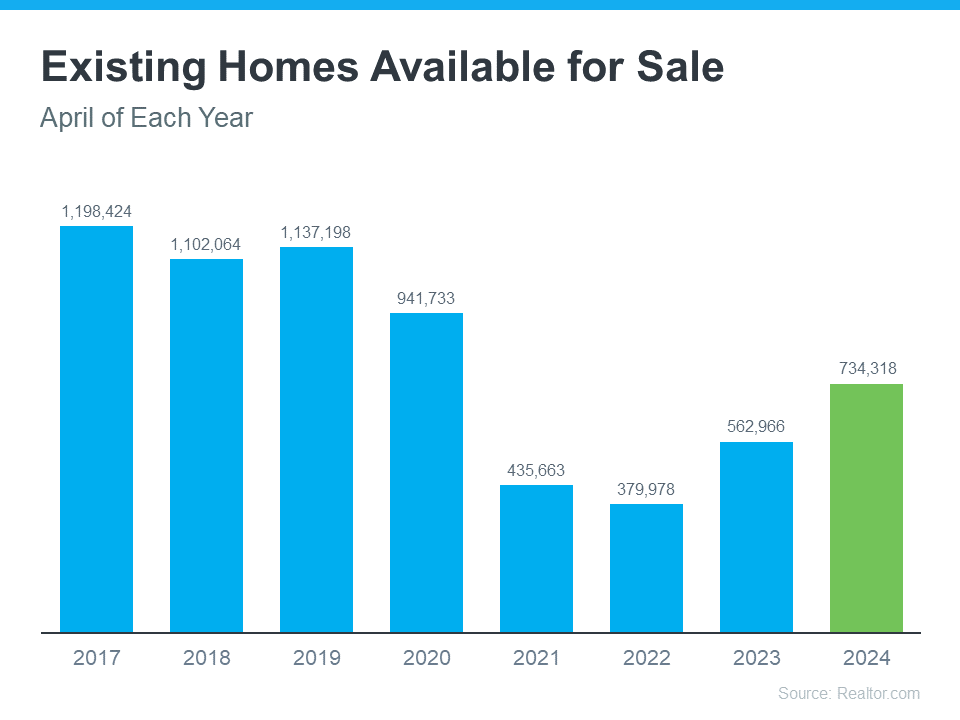
There are more homes up for grabs this year. The graph below uses the latest data from Realtor.com to show in April 2024 there were more homes for sale than there were over the last few years (2021-2023):
As Realtor.com explains:
“There were 30.4% more homes actively for sale on a typical day in April compared with the same time in 2023, marking the sixth consecutive month of annual inventory growth.”
But does this growing inventory make house hunting easier? Yes and no.
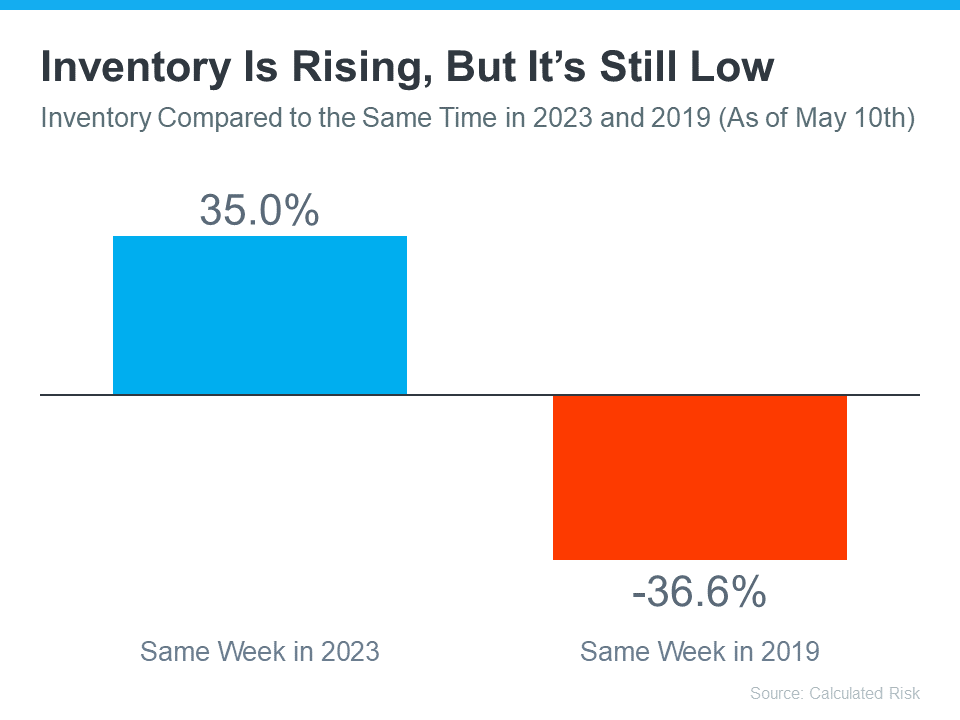
Using the latest weekly data from Calculated Risk, the graph below shows, that even with the growth lately, there are still way fewer homes for sale than there were in the last normal year in the housing market:
What Does This Mean for You?
If you’ve been looking to buy but put your plans on hold because you just couldn’t find what you were searching for, you might see more options now than you did over the past few years – but don’t expect a huge selection.
To check out your growing options, it’s a good idea to work with a local real estate agent you trust. Real estate is all about location. And an agent can help you get the scoop on the homes available in the area you’re interested in. Bankrate explains:
“In today’s homebuying market, it’s more important than ever to find a real estate agent who really knows your local area — down to your specific neighborhood — and can help you successfully navigate its unique quirks.”
Bottom Line
Team up with a local real estate agent who can keep you in the loop on everything that might impact your move, like how many homes are up for sale right now.

by Sonia Roman | May 9, 2024 | Buyers, Buying Tips, First Time Home Buyers, Inventory, New Construction
When you’re planning a move, it’s normal to wonder where you’ll end up and what your future home is going to look like. Maybe you’ve got a specific picture of that house in your mind. But unless you came into this process knowing you want to buy a newly built home, you may not have pictured new home construction.
A trusted real estate agent can help walk you through these two reasons you may want to reconsider that.
1. Adding Newly Built Homes Could Give You More Options
There are two types of homes on the market: new and existing. A newly built home refers to a house that was just built or is under construction. An existing home is one a previous homeowner has already lived in. Right now, the inventory of existing homes is tight. But there may be options for you on the new home side of things.
Data from the Census and the National Association of Realtors (NAR) shows that newly built homes are a bigger part of today’s housing inventory than the norm (see graph below):
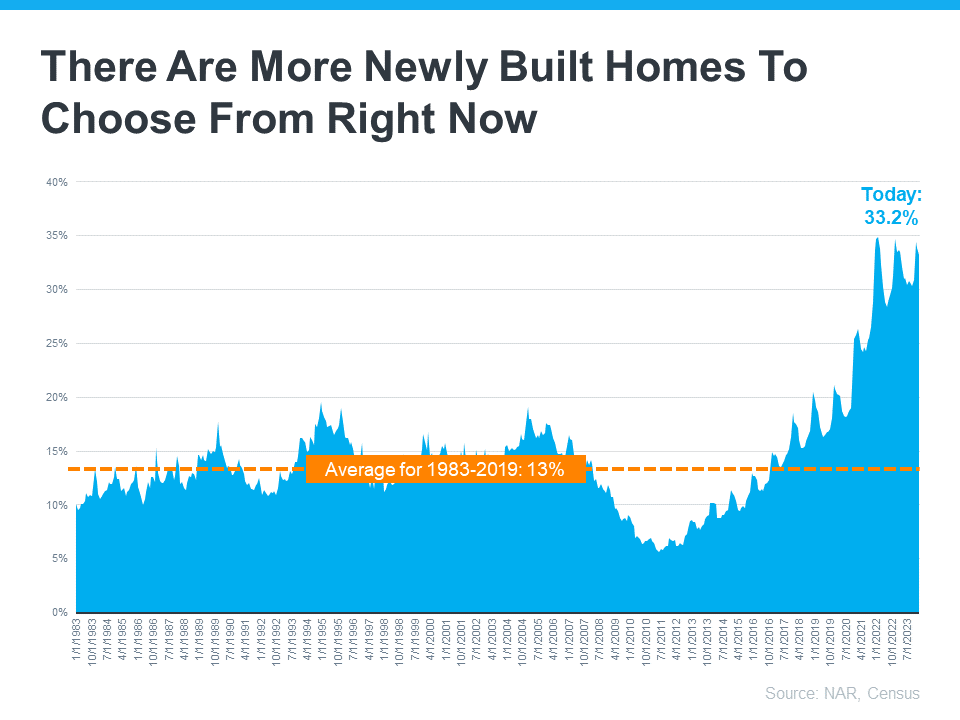
From 1983 to 2019 (the last normal year in the market), newly built homes made up only 13% of the total inventory of homes for sale. But today that number has climbed to over 33%.
Rest assured, after over a decade of underbuilding, builders aren’t overdoing it today. Even with an increase in new construction today, there’s still a significant housing shortage overall. But for you, the uptick in new builds can be a game changer because it gives you more options for your search.
2. Newly Built Homes May Be More Affordable Than You’d Think
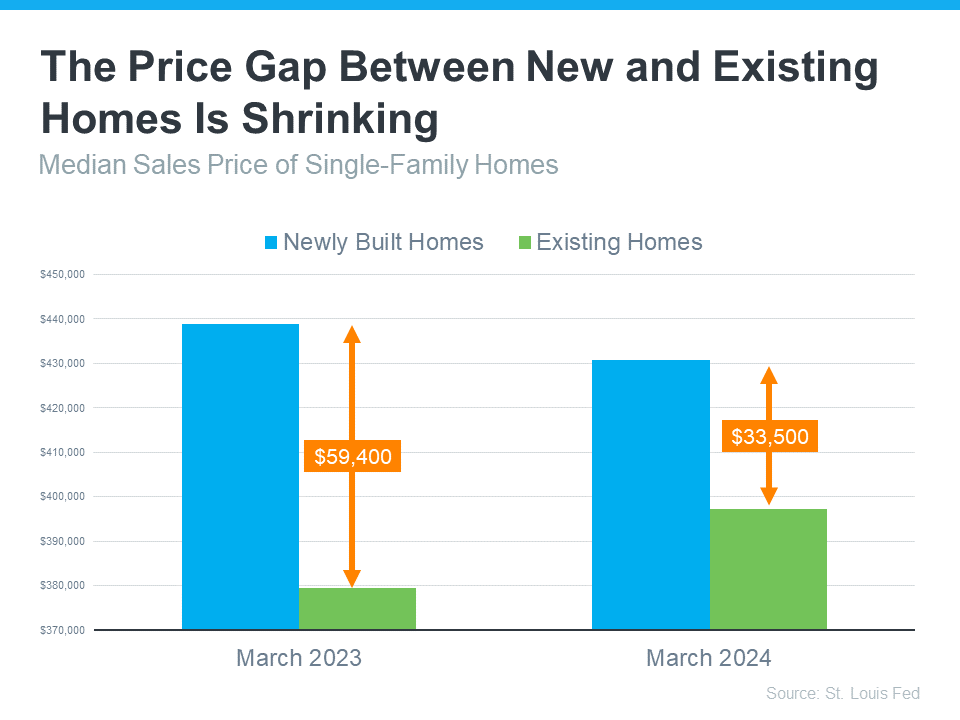
You may still be wondering if a new build could really be an option for you. If you’ve previously written them off because you thought they would be out of your budget, consider this. The price gap between a newly built home and an existing house is shrinking. Here’s why.
Builders are going to build what’s in demand. And they know people need more options right now, especially ones that are smaller and potentially more affordable. So, they’re focusing on building smaller homes at lower price points. The graph below shows the price difference between new and existing homes is shrinking as that happens:
As LendingTree explains:
“In the past, newly built homes have been much more expensive than existing homes — but that gap has been getting smaller recently. In some places today, you may find that the cost to build versus buy is roughly the same.”
And an article from CNBC says:
“While new builds are still sold for slightly more than existing homes, the price gap has significantly narrowed . . .”
Not to mention, some builders are even offering price cuts and mortgage rate buy-downs right now to sweeten the deal. Today there are many reasons new builds may be worth considering. Other buyers sure seem to think so. As Freddie Mac says:
“As the supply of existing homes for sale remains low and home prices continue to rise, more buyers are choosing to purchase new homes than in previous years.”
Just know that buying a newly built home isn’t the same as buying an existing one. Builder contracts have different fine print. So, partner with a local agent who knows the market, builder reputations, and what to look for in those contracts so you have an expert on your side to help you explore this option.
Bottom Line
If you want to find out what builders are doing in your area, connect with a real estate agent. And if you’re willing to cast a wider net to open up your options even more, that agent can talk to you about broadening your search to include other towns nearby.
