
by Sonia Roman | Apr 22, 2025 | Buying Tips, First-Time Buyers, For Buyers
When you’re starting your home buying journey, the term “mortgage pre-approval” often pops up. And while it sounds like a serious financial step — and it is — many people misunderstand what it truly means.
Let’s set the record straight:
Pre-approval isn’t a commitment to borrow — it’s clarity for your journey.
✅ What is Mortgage Pre-Approval?
Mortgage pre-approval is a process where a lender evaluates your financial profile — credit score, income, debt, employment history — to determine how much money they might be willing to lend you.
At the end of the process, you’ll receive a pre-approval letter stating how much you’re qualified to borrow.
This doesn’t lock you into anything — you’re not signing a loan agreement. You’re simply getting a clearer picture of your buying power.
🎯 Why Pre-Approval is Important (Even if You’re Just Browsing)
- Sets a Clear Budget
Knowing what you can afford helps you search smarter. You won’t waste time looking at homes outside your price range.
- Strengthens Your Offer
Sellers take you more seriously. A pre-approved buyer looks more ready and reliable than someone who hasn’t spoken to a lender yet.
- Saves Time & Surprises Later
By having your finances reviewed upfront, you avoid major hiccups during the loan process. It’s better to uncover issues early.
- Gives You Confidence
Walking into open houses knowing your budget gives you peace of mind. You’re not just dreaming — you’re planning.
🛑 What Pre-Approval is NOT
- ❌ A Loan Commitment
You’re not obligated to take the mortgage or work with that lender.
- ❌ A Guaranteed Loan
Final approval comes later, after the home is appraised and underwriting is complete.
- ❌ Permanent
Pre-approvals typically last 60–90 days. After that, you may need to update your documents and get re-approved.
📝 What You’ll Need for Pre-Approval
To get pre-approved, you’ll usually need to provide:
- Proof of income (pay stubs, W-2s, tax returns)
- Credit history and score
- Bank statements and assets
- Employment verification
- ID (driver’s license or passport)
💡 Final Thoughts: Clarity Leads to Confidence
Think of pre-approval as your home buying compass. It doesn’t commit you to a path — it helps you navigate it with clarity.
So if you’re thinking about buying a home — even just casually — talk to a lender. Get pre-approved. You don’t have to take the loan, but you’ll gain valuable insights that can guide your decisions.
Because in real estate, clarity is power.

by Sonia Roman | Feb 4, 2025 | Affordability, Buying Tips, First-Time Buyers, For Buyers
Buying a home is an exciting journey, but it can also feel overwhelming at times. With so many steps involved, it’s easy to feel uncertain about where to start. Fortunately, there are two essential resources that can make the process much smoother, helping you find and secure your ideal home faster. Here’s how a knowledgeable real estate agent and a mortgage pre-approval can set you up for success:
1. A Knowledgeable Real Estate Agent
One of the most valuable resources in your home-buying journey is a professional real estate agent. A good agent brings local expertise and market insight to the table, and they can guide you through every step of the process, from searching for homes to closing the deal. Here’s how a real estate agent can help:
- Expert Market Insight: Real estate agents are immersed in the local market and can give you an insider’s view of neighborhoods, pricing trends, and which homes are worth checking out. They’re also in the know about upcoming listings, often having access to properties before they hit the public market.
- Negotiation Power: An experienced agent can be an invaluable asset when it comes to negotiations. They can help you craft a competitive offer, negotiate with sellers, and ensure you’re getting a fair deal, even in a hot market.
- Access to Listings: Through the Multiple Listing Service (MLS), real estate agents can provide access to listings that may not be available on popular real estate websites. This gives you an edge in finding homes that match your criteria before they get snapped up by other buyers.
- Guidance Through the Process: From the initial search to closing day, a real estate agent handles all the logistics, including scheduling showings, reviewing contracts, and ensuring you meet all necessary deadlines. Their expertise helps to streamline the process and ease any stress along the way.
A real estate agent can save you time and effort, helping you make informed decisions and guiding you toward the best home for your needs.
2. Mortgage Pre-Approval
Before you start touring homes, it’s crucial to know how much you can afford. That’s where mortgage pre-approval comes in. Getting pre-approved for a mortgage can provide you with a competitive edge and help you avoid any surprises down the road. Here’s why mortgage pre-approval is such a powerful resource:
- Confidence in Your Budget: Getting pre-approved gives you a clear picture of how much you can borrow, so you can focus on homes within your budget. This not only saves you time but helps ensure you’re looking at properties that you can actually afford.
- Faster Closing: With your financing already lined up, the closing process can be much faster. Since your lender has already reviewed your financial documents and credit history, it streamlines the approval process when it’s time to make an offer.
- Competitive Edge: In a competitive market, being pre-approved for a mortgage is a huge advantage. Sellers are more likely to take your offer seriously because they know you’re a qualified buyer who can close quickly. This can be especially important if you’re in a bidding war with other potential buyers.
- Interest Rate Lock: When you’re pre-approved, many lenders will offer to lock in an interest rate for a certain period. This can protect you from rising rates before you close on your home, potentially saving you money in the long run.
To get pre-approved, you’ll need to provide some basic financial information, such as proof of income, credit history, and any outstanding debts. It’s an important step in the home-buying process and gives you a clear idea of what you can afford.
Conclusion
Navigating the home-buying process can be complex, but using the right resources can make it much easier. By partnering with a knowledgeable real estate agent and securing mortgage pre-approval, you’ll be well-positioned to find your ideal home and negotiate a great deal. These two resources not only help you save time but also give you the confidence and clarity to make informed decisions, bringing you one step closer to homeownership.
So, if you’re ready to start your home-buying journey, consider reaching out to an experienced real estate agent and getting pre-approved for a mortgage. With the right tools in hand, you’ll be on your way to making your dream home a reality—sooner rather than later!

by Sonia Roman | Jan 29, 2025 | Buying Tips, For Buyers
In a significant shift in the housing market, 17% of homebuyers are opting for multi-generational homes— the highest level ever recorded by the National Association of Realtors (NAR). But what’s driving this growing trend? While multi-generational living has traditionally been used to care for aging parents, today’s homebuyers are increasingly choosing this option for a different reason: affordability.
Why More People Are Choosing Multi-Generational Homes
Multi-generational homes—where families, adult children, or even distant relatives live together under one roof—offer various benefits that make them an attractive solution for today’s challenges. Traditionally, this living arrangement was driven by the need to care for older family members. However, the landscape has shifted due to rising homeownership costs and the need for more affordable living options.
According to the latest data from NAR, the main reason more people are choosing multi-generational living today is cost savings. The increasing prices of homes, combined with rising mortgage rates, are making it difficult for many individuals or smaller families to afford homes on their own.
By pooling their financial resources, multi-generational families can share the costs of homeownership, such as the mortgage, utility bills, and maintenance expenses. This collaborative approach makes it easier to manage the financial burden of purchasing a home, allowing families to live more comfortably without overextending themselves.
Financial Benefits: Affordability and More Space
One of the most compelling reasons to consider multi-generational living is the financial benefit it offers. Families can combine their incomes to secure a larger home or even afford a home in a more desirable location—something that might otherwise be out of reach with today’s high home prices.
As Rick Sharga, Founder and CEO at CJ Patrick Company, puts it, “There are a few ways to improve affordability… purchase a property with a family member.” This growing trend of multi-generational households reflects the need for solutions that ease the financial pressures of homeownership.
Beyond the Finances: Strengthening Family Bonds
In addition to the financial perks, multi-generational living can also bring families closer together. Living with extended family provides more opportunities for quality time, strengthens family relationships, and promotes a sense of togetherness. For those who value family connections, this living arrangement can foster deeper bonds while providing mutual support.
Conclusion: A Worthwhile Consideration
If you’re finding it difficult to afford a home on your own, buying a multi-generational home could be a solution worth considering. Not only does it provide a way to overcome financial hurdles, but it also offers the chance to create lasting family memories.
Before making your decision, it’s important to consult with a local real estate agent who can help you explore your options and find a home that meets the needs of your family. With the rising costs of homeownership, a multi-generational home might be the ideal choice for those looking for more space, less financial stress, and stronger family ties.

by Sonia Roman | Jan 14, 2025 | Affordability, Buying Tips, For Buyers
Buying a home is one of the biggest decisions many of us will ever make. Among the various options available, the “fixer-upper” is a popular choice for those looking to put their personal stamp on a property and potentially save on initial purchase costs. But is a fixer-upper the right choice for you? Before diving in, it’s essential to evaluate your budget, time, skills, and emotional resilience. Here are key factors to consider when determining whether a fixer-upper fits your needs and lifestyle.
1. Budget and Financial Flexibility
A primary advantage of purchasing a fixer-upper is the lower upfront cost compared to move-in-ready homes. However, while the purchase price may be cheaper, renovations can add up quickly. It’s essential to have a clear understanding of your budget and whether you can afford both the house and the renovation costs.
- Upfront Costs: Make sure you account for not only the cost of the home but also any immediate repairs or upgrades that may be needed before you can live in the property comfortably.
- Hidden Costs: Many fixer-uppers hide potential issues such as outdated plumbing, electrical problems, or structural damage. Always budget for these potential surprises, and consider getting a thorough home inspection before committing to a purchase.
- Financing Renovations: If you plan to finance the renovations, investigate renovation loans such as FHA 203(k) loans or HomeStyle Renovation loans that can help cover the cost of repairs.
2. Time Commitment
Renovating a fixer-upper is often a long-term project. If you need a home ready to move in right away, a fixer-upper may not be the best option. Consider how much time you can realistically devote to the renovations.
- DIY Projects: If you’re planning on doing the work yourself, be honest with yourself about your available time and skill level. Renovations often take longer than anticipated, and DIY projects can lead to setbacks, delays, and added stress.
- Professional Help: If you intend to hire contractors, keep in mind that it may take time to get estimates, schedule work, and wait for contractors to finish their jobs. Delays and unforeseen challenges can push back your timeline.
3. Skill and Experience
Not everyone is equipped to handle the extensive work required to renovate a home. If you’re comfortable with DIY projects and have some experience with home improvement, a fixer-upper may be a rewarding challenge.
- Assess Your Skills: Be honest with yourself about your abilities. Renovating a fixer-upper can involve everything from replacing flooring and painting walls to rewiring electrical systems or fixing plumbing. If you’re not confident in certain areas, it’s best to hire professionals.
- Know When to Call in Experts: Some repairs—particularly those involving electricity, plumbing, or structural integrity—require professional expertise. These can be costly but are necessary to ensure your safety and the home’s long-term value.
4. Risk Tolerance
Renovations can be risky. There are often unexpected challenges that arise once you start tearing down walls or discovering hidden problems behind cabinets and under floors.
- Unexpected Costs: Hidden mold, foundation issues, or outdated HVAC systems can significantly increase renovation costs. Always have a contingency fund set aside for unforeseen issues.
- Stress and Frustration: Renovation projects are rarely smooth sailing. There can be setbacks, delays, and stress along the way. If you’re someone who prefers a more predictable, hassle-free process, a fixer-upper might not be for you.
5. Living Situation
If you’re planning to live in the home during renovations, it’s important to assess whether you can handle the disruption.
- Move-In Ready vs. Work in Progress: Some people are comfortable living in a house while it’s being renovated, but others prefer to wait until the work is finished. If you need a home that’s immediately habitable, a fixer-upper may not fit your needs.
- Temporary Housing: If you can’t live in the home while it’s being renovated, you’ll need to factor in the cost and logistics of temporary housing. This could be additional rent or staying with family or friends, which can add to the overall cost and stress.
6. Long-Term Value
A well-renovated fixer-upper can be a great investment. With careful planning and execution, you can increase the value of the home significantly. However, it’s important to consider the long-term potential.
- Neighborhood and Market Conditions: Assess the neighborhood to ensure that the home’s value will rise after renovations. Renovating a fixer-upper in a location where property values are stagnant or declining may not offer the return on investment you’re hoping for.
- Resale Value: If you plan to sell the home in the future, consider how your renovations will affect the resale value. Make sure the improvements align with buyer preferences and the local market trends.
7. Emotional Resilience
Renovating a fixer-upper isn’t just about money and time—it can also be an emotional rollercoaster. You may experience excitement, frustration, and stress, especially if things don’t go according to plan.
- Patience and Perseverance: Home renovations can test your patience. If you thrive under pressure, have a positive mindset, and can handle setbacks, a fixer-upper could be a fulfilling challenge.
- Long-Term Satisfaction: Successfully completing a fixer-upper can bring immense satisfaction. The process allows you to put your personal touch on the property, but it also requires a level of emotional endurance.
Conclusion
A fixer-upper can be an excellent opportunity to create your dream home and build equity. However, it’s not for everyone. If you have the financial flexibility, time, skills, and patience to handle the renovations, it can be a rewarding experience. On the other hand, if you’re looking for a move-in ready home without the headache of constant repairs, you may want to explore other options. Carefully weigh the pros and cons to determine whether a fixer-upper is the right choice for you.

by Sonia Roman | Nov 12, 2024 | Buyers, Buying Tips
As a veteran or active-duty service member, you may be missing out on one of the most valuable benefits available to you: the VA Loan. This government-backed mortgage offers unique advantages that make homeownership more accessible and affordable for veterans, yet many remain unaware of its full potential.
1. No Down Payment Required
The most significant benefit of a VA Loan is that you don’t need a down payment. While traditional mortgages often require 5% to 20% down, VA loans allow you to finance 100% of the home’s purchase price—making it easier to become a homeowner.
2. No Private Mortgage Insurance (PMI)
Unlike conventional loans, VA Loans don’t require PMI, even with no down payment. This saves you money each month and lowers the overall cost of the loan.
3. Lower Interest Rates
VA loans often come with lower interest rates compared to traditional mortgages, meaning you’ll pay less over the life of your loan.
4. No Prepayment Penalties
You can pay off your VA Loan early without any prepayment penalties—giving you more flexibility and the chance to save on interest.
5. Higher Loan Limits
While there are limits based on the county and home price, the VA doesn’t impose a hard cap on the loan amount. In higher-cost areas, you can often qualify for a larger loan than you might think.
6. Flexible Eligibility Requirements
VA loans are available to veterans, active-duty service members, National Guard members, and qualifying surviving spouses. Eligibility is often more flexible than traditional loans, making it easier for veterans to qualify.
7. Closing Costs Are Limited
The VA limits the amount you can be charged for closing costs, which helps make the homebuying process more affordable.
8. Affordable Funding Fee
While there is a one-time funding fee, it’s typically much lower than private mortgage insurance (PMI), and it can be rolled into the loan.
9. Streamline Refinance Option
If you already have a VA loan, you can take advantage of a Streamline Refinance (IRRRL) to lower your rates with less paperwork and fewer fees.
10. No Minimum Credit Score Requirement
The VA doesn’t set a minimum credit score for eligibility, giving veterans with less-than-perfect credit a better shot at homeownership.
Final Thoughts
The VA Loan is one of the most powerful tools available to veterans, but many don’t fully understand its benefits. If you’re eligible, take advantage of these incredible perks—no down payment, no PMI, lower rates, and more—to make homeownership a reality.
Talk to a VA-approved lender today and start your journey toward owning a home. It’s a benefit you’ve earned, and it’s time to put it to use!

by Sonia Roman | May 9, 2024 | Buyers, Buying Tips, First Time Home Buyers, Inventory, New Construction
When you’re planning a move, it’s normal to wonder where you’ll end up and what your future home is going to look like. Maybe you’ve got a specific picture of that house in your mind. But unless you came into this process knowing you want to buy a newly built home, you may not have pictured new home construction.
A trusted real estate agent can help walk you through these two reasons you may want to reconsider that.
1. Adding Newly Built Homes Could Give You More Options
There are two types of homes on the market: new and existing. A newly built home refers to a house that was just built or is under construction. An existing home is one a previous homeowner has already lived in. Right now, the inventory of existing homes is tight. But there may be options for you on the new home side of things.
Data from the Census and the National Association of Realtors (NAR) shows that newly built homes are a bigger part of today’s housing inventory than the norm (see graph below):
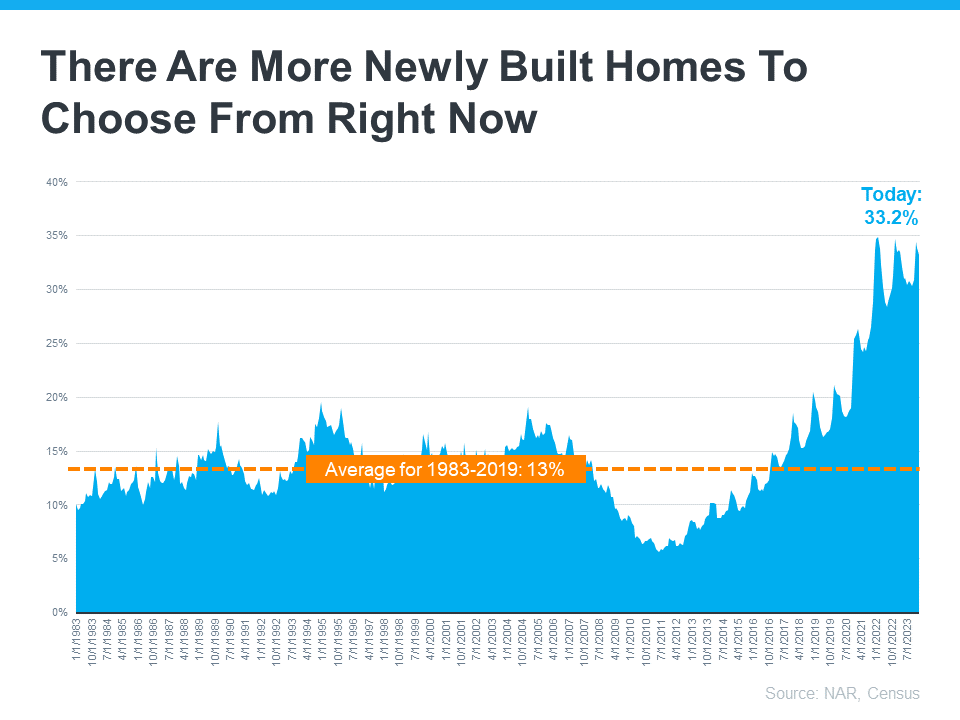
From 1983 to 2019 (the last normal year in the market), newly built homes made up only 13% of the total inventory of homes for sale. But today that number has climbed to over 33%.
Rest assured, after over a decade of underbuilding, builders aren’t overdoing it today. Even with an increase in new construction today, there’s still a significant housing shortage overall. But for you, the uptick in new builds can be a game changer because it gives you more options for your search.
2. Newly Built Homes May Be More Affordable Than You’d Think
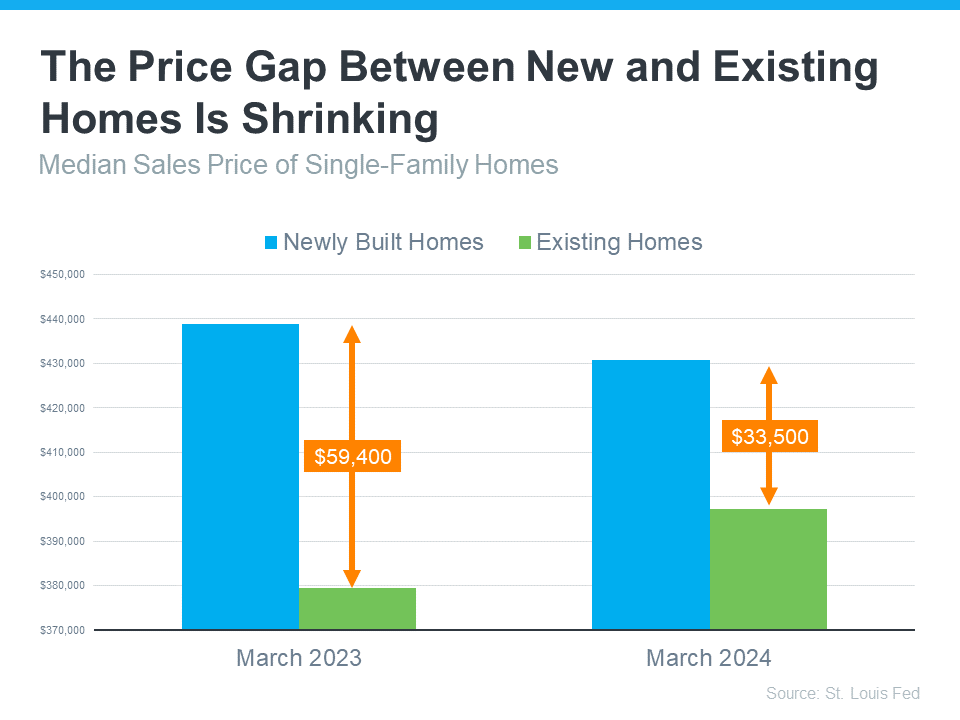
You may still be wondering if a new build could really be an option for you. If you’ve previously written them off because you thought they would be out of your budget, consider this. The price gap between a newly built home and an existing house is shrinking. Here’s why.
Builders are going to build what’s in demand. And they know people need more options right now, especially ones that are smaller and potentially more affordable. So, they’re focusing on building smaller homes at lower price points. The graph below shows the price difference between new and existing homes is shrinking as that happens:
As LendingTree explains:
“In the past, newly built homes have been much more expensive than existing homes — but that gap has been getting smaller recently. In some places today, you may find that the cost to build versus buy is roughly the same.”
And an article from CNBC says:
“While new builds are still sold for slightly more than existing homes, the price gap has significantly narrowed . . .”
Not to mention, some builders are even offering price cuts and mortgage rate buy-downs right now to sweeten the deal. Today there are many reasons new builds may be worth considering. Other buyers sure seem to think so. As Freddie Mac says:
“As the supply of existing homes for sale remains low and home prices continue to rise, more buyers are choosing to purchase new homes than in previous years.”
Just know that buying a newly built home isn’t the same as buying an existing one. Builder contracts have different fine print. So, partner with a local agent who knows the market, builder reputations, and what to look for in those contracts so you have an expert on your side to help you explore this option.
Bottom Line
If you want to find out what builders are doing in your area, connect with a real estate agent. And if you’re willing to cast a wider net to open up your options even more, that agent can talk to you about broadening your search to include other towns nearby.
